I am driving slowly down a gravel road. The window is open, and the smell of grasses and firs and dust is commingled in a magic way that triggers a response of peace for me. The promise of hope has brought me here
I get out of my car, parking alongside the rural, empty road. My feet crush gravel as I walk to the small open field leading to the woods. I take a deep breath, feeling my shoulders relax. With my face to the sun, I walk towards a copse of aspen trees that hedge in a much larger forest of old growth pine and fir.
Grasses wave beside be, brushing my legs, occasionally revealing wild flowers swaying for attention as I move purposely forward. Step by step, the elevation rises subtly, and I feel the stress leave my body, even as my heartbeat matches my steady footfall.
Soon I hear the “shhhhhsh” of the aspen grove, leaves quivering and trembling in the mid day sun. The thin, rounded leaves, golden and yellow, shiver a welcoming “shoosh” as I walk into their ranks, feeling smaller, yet not diminished by the rising papery white trunks. My hand stops to run along the tender bark, scars showing in stark, dark relief to the glowing white rise of trees. I look up, then slowly close me eyes as the sun distills light through the quaking leaves, the wind weaving around and through the swaying canopy. The distilled light warms my head, and sieves my troubled thoughts away, swirling the hair on my head, dispelling the troubled thoughts into a playful wind that sends the leaves into a frenzy of rejoicing.
This is not the place for stress, or memory, or pain.
My path now is narrowing into an ancient one, known to travelers and animals since times long past. The swaying rustle of high desert grasses is replaced by a carpet of green grass, darkening even as I approach the old growth.
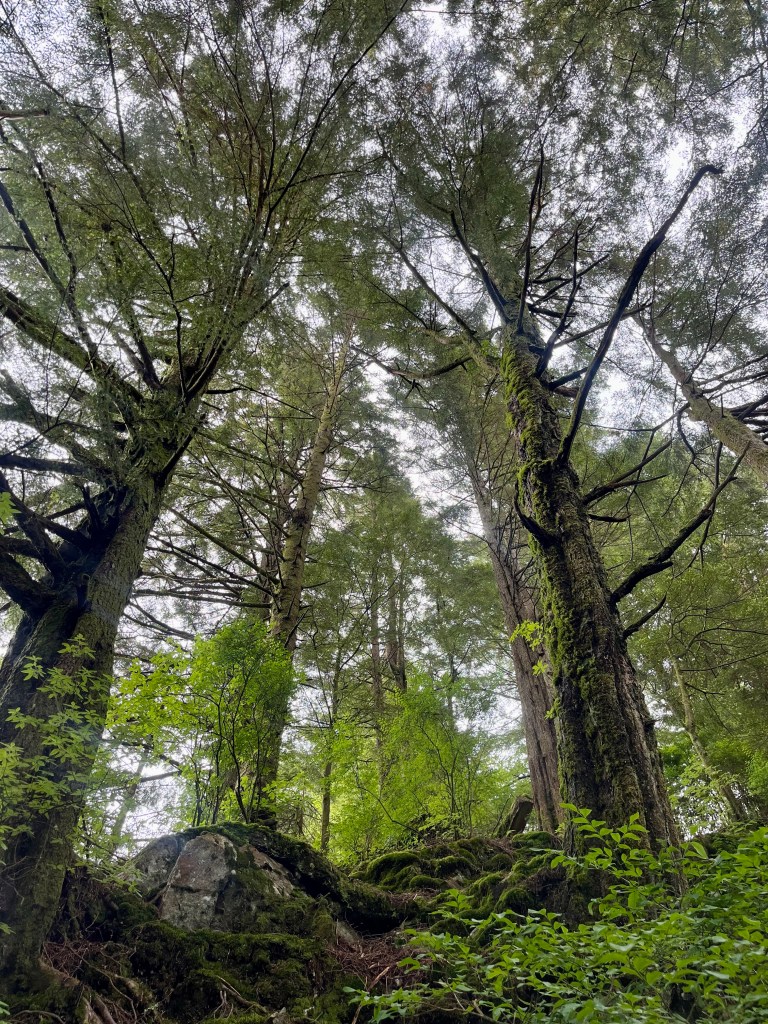
The path closes in. Young saplings surround me, protected by the guardian Douglas firs and pine trees that rise and rise, and the air become still as I enter this sacred space.
I walk slowly, inhaling great deep breaths of air released by these heavily sapped trees. The canopy is closing in protectively, and the great branches above me almost fully hide the sunlight. They hover over me, shielding me, protecting me, even as the saplings and small patches of moss and ferns clothe their massive roots in soft, tender growth.
I hear the creak of the large ancient ones slowly swaying above me. Small branches crack as unseen forest dwellers jump from limb to limb.
I close me eyes, arms outstretched, and bathe in the forest. The light is dim, the wind corralled in the tree tops, funneled down to an occasional cool breeze brushing me gently, scented with nuances that are centuries old.
The sacred space closes in around me, encircling me in peace and calm, fresh air and the brush of fern fronds.
From here I know exactly the path that takes me into me safest place.
It is one life’s great ironies that I have spent over two decades here. I love Autumn, I appreciate the beauty and stillness of Winter. I enjoy Spring, and the new life bursting through dormancy.
Instead of four seasons, I have a lot of heat and humidity. Summer has always been my least favorite season, and yet here I am, in the thick discomfort of perpetual swelter.
We will have a cold front this weekend, with temperatures dropping into the high 30’s.
I will pack as much autumnal celebration into these days as I can.
I’ll be wearing woven beanies and warm gloves. Layers of comforting soft clothes, and a scarf. Drinking seasonal hot beverages. Sitting by the fire pit and looking up into the crisp, clear sky.
I’ll turn on the heat in the house.
By Monday, it will be like a sauna again.
I’ll turn the AC back on. I’ll take the top off my Jeep. I’ll put up my hair, and take off the layers.
November is a month that is charged with a lot of emotion, due to a history of many personal losses.
Autumn helps me process my grief. I find comfort in the cooler temperatures. As the cold weather brings out the coats and cozy clothes, I can retreat into myself, layered in protective comfort.
The blustery weather is a reflection of my unsettled thoughts, and I find myself much more introspective.
The leaves – how I miss the leaves changing color! The mesmerizing, swirling spin to the ground. The crackling underfoot. The smell of cold, damp decay. It becomes a solemn foundation for my grief, which is ever evolving.
Instead, things around me look the same, day after day.
I have to go on at least one long drive a year to find the Autumn my soul longs for. Pictures aren’t enough – I enjoy looking at them, but I need all five of my senses involved.
Likewise, my healing has to be more than just emotional – it has to be physical and spiritual as well. When one aspect is missing, the rest still suffer.
I find myself longing for a home near the mountains, where all year long the environmental changes that accompany the seasons will be right outside my doors and windows.
Until then, I have myself steeled for the blues that strike me with the monotony of this protracted summer that keeps me from feeling whole, and stunts my healing.
Last night I had a meeting with some friends for coffee and fellowship.
I came home from work in pain, and exhausted. Par.
I changed into comfortable clothes, grabbed my wallet and keys, and left.
Halfway there, my continuous glucose monitor alerted that it was expiring in 30 minutes. At the same time, my blood sugar was low normal – and dropping.
In that moment I realized I left my “pancreas” at home – the nickname for my bag of diabetic supplies, including insulin and a manual glucose monitor.
I had to eat – regular meals are critical for my blood sugar regulation, and I know from experience it was dinner time. To ignore it meant sure hypoglycemia.
So I pressed on to my destination, and ate dinner with my friends.
In the nearly two hours I was there, not one minute was spent where I wasn’t anxious about my blood sugar.
I knew logically that the carbohydrates I consumed would be adequate to maintain a reasonable blood sugar…but would my blood sugar bounce back from the low it was heading toward without side effects? Would the carbs I consumed before I drove back home and checked my blood sugar manually drive my blood sugar to hyperglycemia?
When I got home I had to attend to my disease right away. I checked my blood sugar – it was a little higher that it normally is after I eat. I entered my blood sugar reading into my insulin pump, and it gave me my insulin.
Next, I replaced both my transmitter and my sensor on my continuous glucose monitor. I have to put the device numbers in my phone and insulin pump, then prep the skin, and use the insertion device to drive a needle into my body so it can deposit the cannula that reads my blood sugar.
I also had to refill my insulin cartridge, and change my insulin pump site. More skin prep, another needle driving in a cannula. Secure with tape.
Before bed, I had to manually check my blood sugar again – the continuous glucose monitor takes two hours to warm up. My blood sugar was borderline, so I had to have a small snack. I didn’t want it, I wasn’t hungry…but I had no choice.
When the CGM finished warming up, it awakened me with an alert. I glanced at my blood sugar. It was okay, so I went back to sleep.
Like the vast majority of people, I don’t pay much attention to these cause dedicated monthly events, but now I am part of the 8.7 million people worldwide who are living with type one diabetes.
I try and stay grateful for the amazing technology that makes managing my diabetes so much easier.
The continuous glucose monitor (CGM) which has literally been a lifesaver, alerting me to high or, more dangerous, low blood sugars. The accuracy of these readings help me when I need to give myself insulin.
The insulin pump, which is a closed loop system that gives or holds insulin, based on that blood sugar reading it gets from the CGM.
The food apps that give me carbohydrate data that I input into the insulin pump to keep my blood glucose in range.
I’m grateful.
Eleven years ago, I was erroneously diagnosed with type 2 diabetes. This happens a LOT to those who, like me, have adult onset type 1 diabetes. EVERYONE responds the same when I tell them how old I was when I got type 1 diabetes – “ I thought only kids got that!”
Nope.
Here I am, five years into my T1D diagnosis, and it is hard.
I’m writing this blog in the 0400 hour. Sleep is one thing that is regularly sacrificed on the TID altar.
I used to have no problems sleeping – I fell asleep easily, and slept for hours.
Those days are gone.
Diabetes consumes my life.
“Carefree” has been lifted from my vocabulary.
Hundreds of times a day, I glance at my smart watch to see what my blood sugar is. I have to make sure I stay ahead of any trends up or down that need to be addressed.
There is no such thing as too tired or too busy to eat – I HAVE to eat. Decades of bad habits are hard to break – but I have to break them to stay the long term sequela that can render me riddled with neuropathy, blindness, or permanent organ damage.
I have to think about EVERYTHING I eat and drink. Every single carbohydrate is counted, via online apps or practiced best guesstimate. Before I eat I have to determine the carb amount for my food, and enter it in the insulin pump, so it can give me (hopefully) the right amount of insulin.
Drinking beverages with carbs? I gave that up. I drink a LOT of water. I have my coffee with artificial sweeteners. I drink diet soda. Not because I want to – it’s just not worth it to deal with the sudden high blood sugars that are hard to control.
I’ve also given up favorite foods – I used to eat a LOT of cereal. Now, cereal and milk shoot my blood sugar up drastically despite insulin, so I don’t eat it.
The lifesaving diabetes management devices of mine devices are a double edged sword.
The CGM is inserted with a decent sized needle, where the cannula hovers just under the skin for 10 days, until it must be replaced. The insertion site can fail due to scar tissue or insertion issues – and it has to be replaced immediately. Or the transmitter, which lasts 90 days, may malfunction. Or the Bluetooth may not connect for a continuous reading. Or I may roll over in sleep and a pillow will block the reading.
The insertion devices are cheap and fail often, leaving me chasing high blood sugars down as I try to determine the culprit. Devices alarming due to this wake me up, keep me preoccupied, and haunt my dreams.
The insulin pump is the biggest hassle. When it works, it’s great – but it’s site has to be changed every three days. I have to meticulously keep the skin clean to stave off a pump site infection. The needles that insert the cannula leave scars, and often nick unseen capillaries, leaving large purple bruises on my arms and abdomen. I have to wear it clipped to my clothing so it won’t fall and break – it costs as much as a used car. I have to get creative.
I cannot go ANYWHERE without bringing juice or candy or glucose tabs. That’s just for the quick trips out of the house. For anything over a couple of hours, I have to carry food. My car has juice boxes in the glove box. Always.
There is no spontaneity. When I plan a vacation, I have to be sure medical care is readily available, and I have to have a good protein source for meals, as well as emergency juices, etc. I must have a way to keep my insulin cool. I have to carry a bag of diabetes supplies, in case my devices fail. A manual glucose monitor must always go with me, along with lifesaving, expensive prescription glucagon or the like – mysteriously not covered by insurance, but essential for blood sugars that won’t stop falling to dangerous levels.
Exercise? I need to do it. I haven’t figured out yet how to do it without having sudden, precipitous low blood sugars. I’ve got a pile of books on diabetes, and conflicting opinions keep my head swimming.
Then there is eating in general. The opinions from the medical field vary wildly. Balanced ADA diet (causes weight gain for me, and isn’t my way of eating). Keto or low carb (worked great when I had pancreatic function still. Now I don’t want to live on meat and cheese). Whole food, plant based vegan (by far the best plan for me – this lifestyle keeps my blood sugar the most stable, decreases my insulin use, and is the most satisfying- I love fruit. But after decades of eating like an American, I’m struggling to stay 100% compliant.)
There are many more diets out there, not to mention the constant (usually) well meaning souls who feel the need to police what I am eating. Want unsolicited advice on what you should or shouldn’t be eating? Identify as a diabetic.
There are also dozens of extrinsic and intrinsic factors that influence my blood sugar every single second of the day – so even when I am “doing everything right”, I may still be on a rollercoaster of high and low blood sugars.
It’s exhausting – mentally and physically. It’s relentless, and my immune compromised self is wrung out from the metabolic war that never, ever stops. I live in a state of constant, unrelenting exhaustion. I work full time, I try and take care of what I need to around the house, I want to spend more time with my family. I am utterly exhausted.
Another night comes. I’m up a couple of times a night on average, and due to diabetes complications with rollercoaster blood sugars, and/or devices alarming, many nights are sleepless.
Hypoglycemia feels like crap and stops me in my tracks. It must be addressed immediately- if my blood sugar gets too low I can have a seizure, or worse. As I’m combatting it by chugging OJ, I’m shakey, dizzy, sweaty, and I can’t think clearly. It is not enjoyable.
Hyperglycemia makes me feel out of sorts, fuzzy and awful. I’ve spent many a sleepless night titrating insulin, trying to get to a safe number I can sleep with.
My lab work says I’m doing a good job “controlling” my diabetes. My endocrinologist and diabetic educator are happy with me.
I’m vigilant, I’ll give you that.
It’s still the hardest thing I have ever done – and it’s here. Forever.
I pray for a cure in my lifetime, even as I’m grateful for the lifesaving insulin that is a part of my life.
I’ve been a noticer for as long as I can remember.
I am vitally aware of my surroundings. My senses are on the lookout for new sights, smells, sensations.
This morning I went outside to get something out of the car. As soon as I stepped out, the morning sunshine highlighted the live oak in such a way that it caught my breathe, and I stopped to appreciate it.
This happens all the time.
Flowers. Trees. Lizards. Little green frogs. The sky. The sky!
I assumed everyone was like this, but when I married, I discovered they are not.
While my children were raised by a very observant parent, and grew up m pointing out the amazing things they saw to me, my step kids didn’t say a thing.
Didn’t seem to observe a thing!
It made me sad.
I think it is both an inborn and a learned thing to be a noticer.
My children have artistic bent to them in one manifestation or another, genetically passed down through my family tree.
My husband is a genius IQ engineer. He appreciates art and beauty, but doesn’t go looking for it.
He didn’t train his children to look for it, and so they didn’t. And don’t.
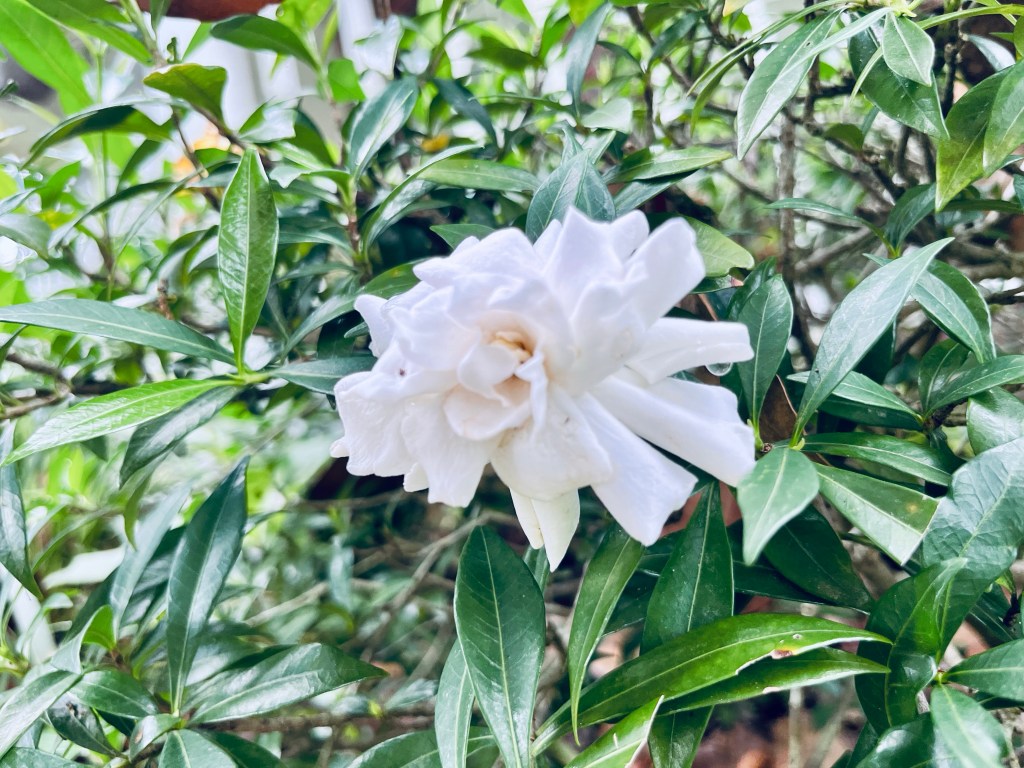
Ah, but I’ll never stop taking moments each and every day to stop wonder at the spinning silkworm. The blooming hibiscus. The way the light hits the trees right before sunset. The smell of cut grass. The way it feels outside when summer releases it’s grip, and the morning is fresh.
My husband just shakes his head when I am so overcome by this worlds’s beauty that my eyes fill with tears.
I’m just grateful that I recognize it – and hope I never stop.
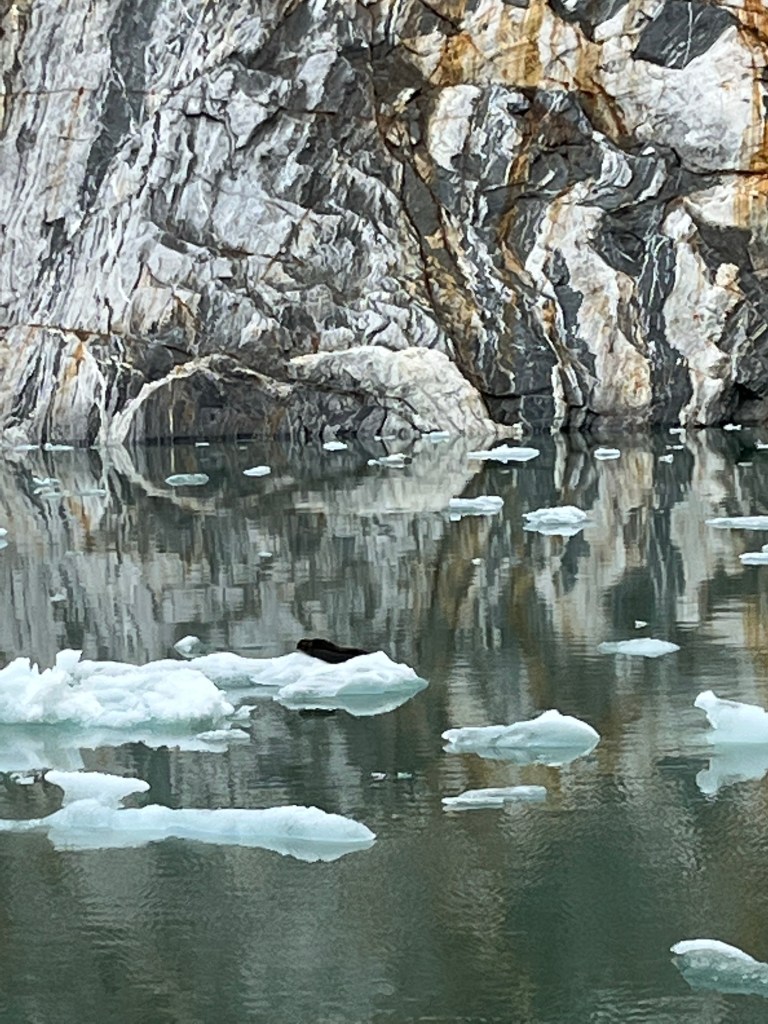
Baby seal on iceberg in Tracy Arm Fjord, Alaska Photo by Lara Anderson Stafford
I was people watching today at the airport, and subsequently observing behavior on the plane.
I’ve long known that cell phones and similar electronic devices have lead to the downfall of many things. Common courtesy. Polite conversation. Etc.
Most alarming and potentially dangerous is a lack of situational awareness.
Having worked in a military environment, situational awareness is something drilled home regularly.
Having ones face down, engaged with a device, removes most or all of your situational awareness.
Originally, we all saw the videos of people running into walls or falling into fountains while they stared at handheld devices. I am sure this still happens – so much so, it isn’t posted as much on social media.
More nebulous is the self centeredness that happens when the majority of your interaction is with a screen.
More times than I can count daily I hear people talking in their outside voices inside small spaces. As a genetic loud talker, I understand this phenomena and try to avoid it.
Now I can’t go out in public without having to hear intimate conversations. Nice restaurants used to be a place of hushed talk and soft music. Now one loud talker at a table ruins it for others around.
Worse, others feel the need to overtake the loud talker, until the entire restaurant reaches dangerously high decibels. Don’t believe me? Download a decibel reader and put it on your table, and count the number of times the frequency you are hearing is in the danger zone.
On airplanes, most people want to rest or read. Inevitably, there will be the unaware passenger (s) talking extra loud, necessitating headphone devices for every flight, if you want any peace. Not for one minute do these loud talkers consider those around them.
Online, you can type your response as you are reading the one typing currently. In real life, there is a lot of over talking. Where once one would politely wait for the other to finish speaking, now new conversations are started before the speaker can finish a thought.
Those are just a couple polite society issues!
Safety is a whole other matter. In new environs, or while walking alone in darkening hours, it would behoove us to look at our surroundings, identifying hazards – potential or actual.
Instead, heads are bowed as people move forward, and any real or potential danger goes unseen.
It’s the perfect hunting ground for predators.
All avoidable, with just a flick of a hand to shut off a device and put it away.
I’ve been troubled for some time by all of the reality show driven societal changes.
Instagram started as a way for people to share pics, but now, it seems the majority of Gen Z wants to be “social media influencers”.
What exactly does that mean?
It’s a focus shift…and a disturbing one.
They are determined to show off the fabulous experiences they are having…but are they having them? All of the effort goes into making the perfect shot. Retake until you get the right tag line.
They want to travel…so they can brag about it. How many selfies can they take with famous works of art? At famous landmarks?
Do they look with the eyes of an explorer at all these new places…or as a consumer? Looking to get more likes/follows seems the more likely goal.
I pity those caught up in this vacuous life.
My son – in that generation – is a photographer. It doesn’t surprise me, because he and all my children have been outside kids. Observant offspring.
Instead of staring into a phone or pad, my kids were looking out windows. They used all their senses, and would excitedly roam and explore, showing me their discoveries they found…outside.
To this day, they notice the sky, the clouds, the trees, wildlife.
They notice.
The whole world is going by – and there is so much to do, see, taste, and feel.
None of which can be done while you are holding a phone and striking a pose.
When I was in middle school at Clark AFB, Philippines, I was chosen to participate in a session with an artist in residence.
I was a precocious and very artsy kid. I had a great art teacher, and she realized I had a bit of talent and a lot of enthusiasm, and she stoked that fire in me.
One year I was chosen to be in a small group of students that got to work with esteemed Native American artist Charles Loloma.
He taught us tufa casting. Tufa casting was introduced to Native Americans by the Spanish.
We were instructed to come up with a design for a piece of jewelry. Step one was drawing the design out, and then the assistants would let us know if our design would work in this medium. Mr Loloma walked around the room, softy giving ideas on the sketches coming to life on paper.
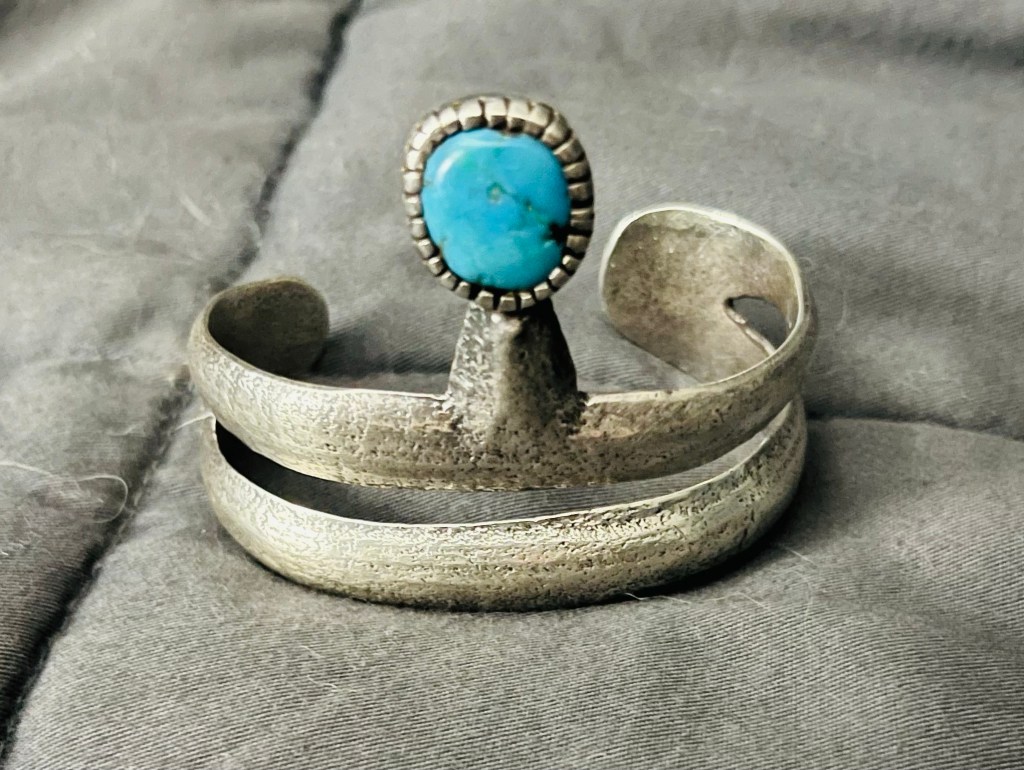
Once I had my design, I drew it with pencil on a brick sized piece of tufa stone, a type of soft volcanic rock. Then I scooped and carved the design into the stone.
The assistants came around and cut air vents in the pale stone, and clamped my carved stone against the flat surface of another tufa stone.
Next, under close adult supervision, molten silver was poured into the cast. Once set, the clamp was removed, and the stones separated to reveal my newly formed bracelet.
Next came the real work – turning this rough, flat design into a wearable piece of jewelry.
The assistants cut the sharp air vent silver spikes off the edges. Then I spent quite a long time working on the rough silver, using finer and finer grades of sandpaper, until the silver was smooth enough on all surfaces, pleasantly rounded off on the edges.
A wooden cone was given to me to help form the flat silver into a bracelet. After the assistants got it started, banging it onto the cone, I continued to bang the piece, until it fit my delicate wrist.
Now I had the bracelet I had designed and made, and I was amazed by the texture the stone had left in the silver.
We then showed Mr Loloma our pieces, one by one, proudly handing him our works.
As I got to him, he held the bracelet with a smile. Suddenly he produced a leather pouch from his pocket, and began pulling stones out of it. Each stone was beautiful, each a different size and shape, from turquoise and lapis lazuli, to stones that held desert colors that I could not identify.
One by one, Mr Loloma held stones up to my bracelet. Finally, he found a piece of turquoise that pleased him. With a grin, he motioned me over to his work station, where I watched him encase the bottom and sides of the stone with silver, and notch the edges around the stone, with an expert’s ease.
He then attached the stone to the peak of my bracelet. His experienced hands took out a polishing clothe and lovingly polished my bracelet to a shine, before handing it back to me with a nod.
I thanked him profusely, both for the stone and for the entire experience. I walked out of the classroom with my bracelet on my left wrist, a perfect fit, admiring the turquoise as the sun hit it in the afternoon light.
Walking to the bus that would take me home, a man nearby said to me “I’ll give you $1000 for it!” I was shocked – more from a strange man talking to me, but also that anyone would ask for this bracelet, which was already precious to me.
Now, over four decades later, the bracelet still fits perfectly. Every time I slide it on, it is cold, but warms quickly on my skin. It’s at home on me – made in my imagination, brought to life with the patient guidance of Charles Loloma and the artist in residence program.



 WriteRN Ramblings
You must be logged in to post a comment.